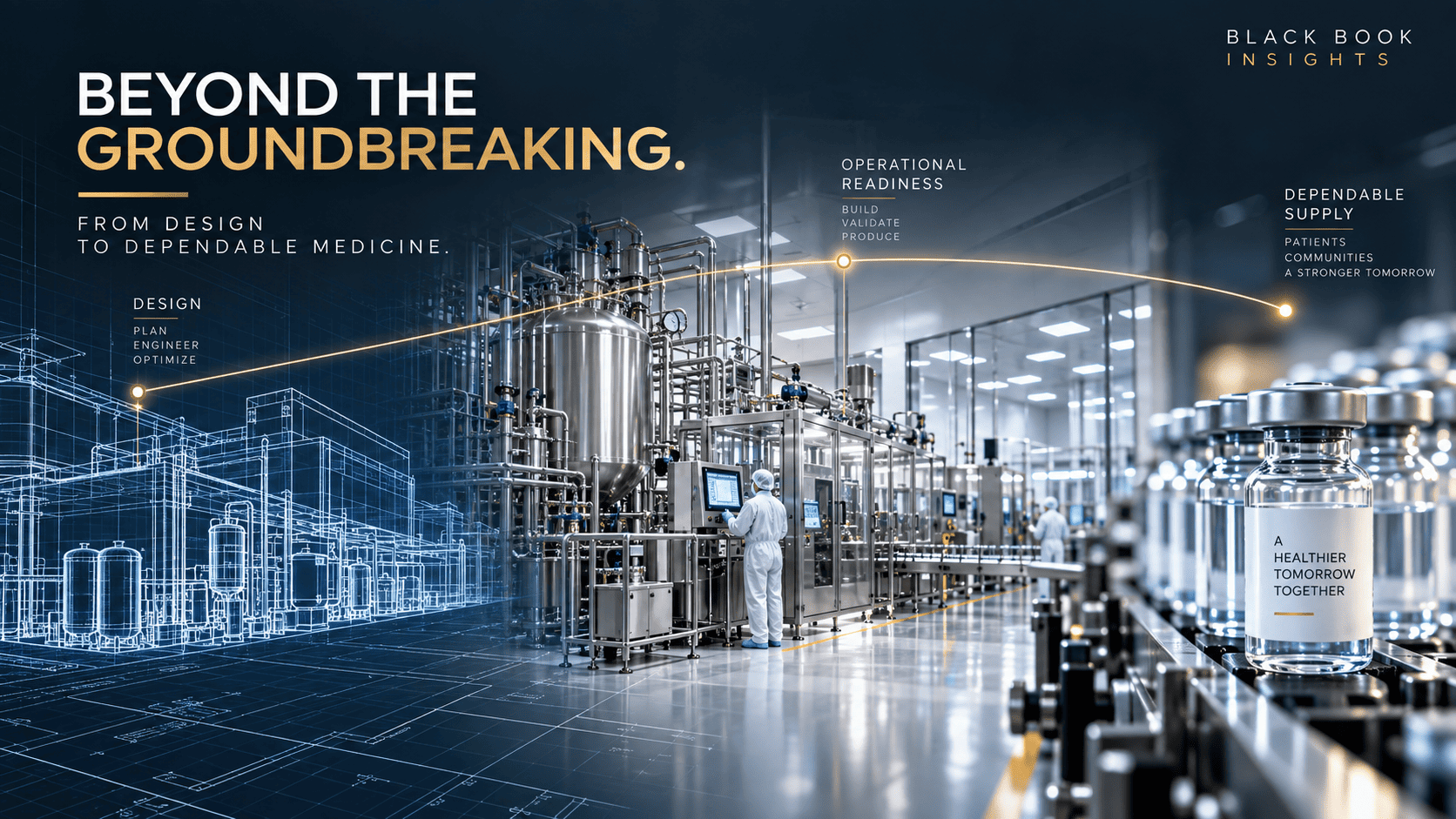
Pharmaceutical reshoring should be measured by the path to dependable medicine supply—not simply by construction spending, square footage, or a groundbreaking ceremony.
A pharmaceutical factory is not a supply-chain achievement merely because the building is complete.
For boards, investors, economic-development agencies, and healthcare buyers, the more useful question is when the facility can contribute dependable, appropriately authorized production.
That is why the FDA’s PreCheck Pilot Program deserves attention in September’s reshoring discussions.
On June 29, 2026, the FDA announced that it had selected seven companies for the program after receiving more than 80 participation requests during the February–March application window. The initiative supports new domestic pharmaceutical manufacturing facilities through earlier engagement with the agency and greater predictability around facility evaluation.
The important development is not another factory announcement. It is an effort to change when regulatory questions enter the development process.
Move the conversation upstream
The pilot has two phases: facility readiness and application submission. Its design allows selected manufacturers to seek FDA input before a facility becomes operational, then build on that work during the product-application process.
FDA’s detailed program structure includes pre-operational reviews addressing facility design, equipment installation and qualification, and pharmaceutical quality-system design. A facility-specific Type V Drug Master File serves as a repository for relevant information supporting later applications.
For a manufacturer, the strategic value is the opportunity to confront difficult questions while designs and operating plans can still be changed.
Black Book’s view is that this principle extends beyond the pilot itself: regulatory readiness should shape the factory, rather than being treated as a final inspection of decisions already made.
Earlier engagement is not blanket approval
PreCheck participation should not be presented as a guarantee that a product will be approved or that commercial production will begin on a promised date.
FDA explicitly notes that the overall application timeline can depend on clinical, bioequivalence, and other non-facility considerations. It also distinguishes a possible pre-operational site visit from an inspection.
That distinction should appear in investment presentations, customer discussions, and public announcements.
An earlier conversation can improve the quality of a development plan. It cannot replace the evidence needed to support the relevant regulatory decisions.
The initial participation window is also closed. Companies planning a new facility should not assume that the existing cohort announcement represents an open enrollment program. FDA says information about future iterations or expansion will be posted as it becomes available.
Replace the construction dashboard with a supply-readiness dashboard
Black Book recommends that pharmaceutical reshoring projects report construction progress alongside a separate assessment of production readiness.
The dashboard should ask whether the manufacturing process is sufficiently defined, whether equipment and utilities are ready for their intended uses, whether the quality organization is staffed, and whether documentation responsibilities are clear.
It should also identify dependencies outside the building. Which ingredients, packaging materials, testing services, technical specialists, and distribution capabilities are essential to the first commercial supply? What happens when one of those dependencies is late?
These questions do not diminish the value of domestic investment. They make the investment more useful.
A completed facility with unresolved operating dependencies should not be described with the same confidence as a facility demonstrating repeatable production and dependable supply.
Buyers should help define the outcome
Healthcare purchasers also have a role in making pharmaceutical reshoring commercially credible.
Black Book recommends that buyers evaluating prospective domestic suppliers request milestone-based information rather than relying on investment announcements. The discussion should connect manufacturing readiness with product availability, quality expectations, supply commitments, and contingency arrangements.
Manufacturers, in turn, should distinguish potential demand from committed demand when deciding how much dedicated capacity to finance.
A factory designed around an optimistic sales forecast is not necessarily a resilient source of medicine. The operating plan and the purchasing plan need to meet.
For public officials, the same principle suggests a more useful set of questions about supported projects: What products will become available? Which supply vulnerabilities will be reduced? What evidence will demonstrate that the new capability is working?
Black Book’s position: the pharmaceutical reshoring opportunity is not just to construct more facilities. It is to organize development so that manufacturing, regulatory, quality, and commercial decisions reinforce one another from the beginning.
The most meaningful ribbon-cutting is the point at which a new domestic capability becomes dependable medicine supply.