
Insights & Analysis
Expert perspectives on reshoring, manufacturing strategy, and supply chain transformation

Finance, Strategy
The next reshoring boom could produce a familiar mistake: communities competing aggressively for projects without fully pricing the cost of winning. State and local incentives matter. KPMG’s 2026 tariff survey found that nearly half of respondents said state and local incentives strongly influence reshoring decisions, and 68% would reconsider reshoring if incentives were significant.
June, 2026

Technology, Workforce
The reshoring jobs debate is too blunt. The better question is not whether reshoring creates jobs. It is what kind of work returns, who performs it, and how much of it is absorbed by automation before it ever appears in employment headlines.
June, 2026

Compliance, Supply Chain
For years, some companies treated country of origin as a documentation exercise. That era is ending. Tariffs, forced-labor enforcement, USMCA review, and rules-of-origin scrutiny are turning origin claims into board-level risk. Companies that rely on vague supplier attestations, incomplete bills of material, or superficial “substantial transformation” narratives are moving into dangerous territory.
June, 2026

Execution, Sustainability
The reshoring debate is still too focused on labor. Labor matters. Automation matters. Incentives matter. Tariffs matter. But for a growing number of industrial projects, the first gating question is simpler: can the site get enough power?
June, 2026

Supply Chain
A factory can be reshored without the supply chain being reshored. That distinction is now one of the most undercovered risks in U.S. industrial strategy. A company may move final assembly to Ohio, Texas, Tennessee, Arizona, or South Carolina and still depend on imported controls, sensors, specialty chemicals, machine tools, power electronics, castings, resins, circuit boards, or precision components.
June, 2026
Execution, Finance
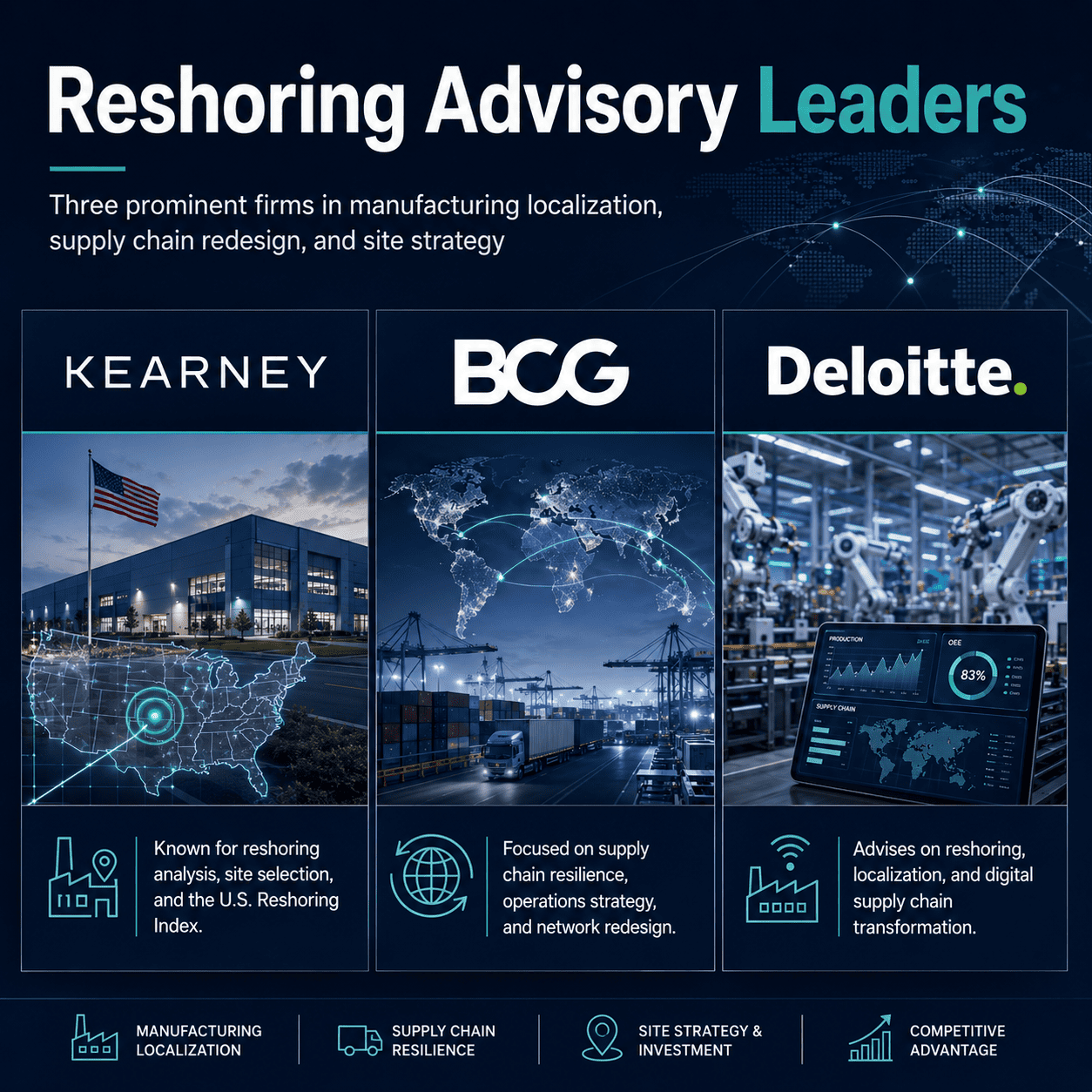
The next reshoring bottleneck may not be capital. It may be decision architecture. From Q2 through Q4 2026, demand for reshoring consulting and advisory firms is likely to rise for a simple reason: companies have moved beyond asking whether supply chains are exposed. They now need to know what to do, in what order, and at what cost.
June, 2026

Industry
Not every industry is reconsidering reshoring for the same reason. Some are reacting to tariffs. Others are reacting to forced-labor enforcement, rules-of-origin risk, defense readiness, customer pressure, or the rising cost of long-distance supply-chain fragility. The result is not one reshoring wave. It is a series of sector-specific recalculations
June, 2026
Strategy, Supply Chain
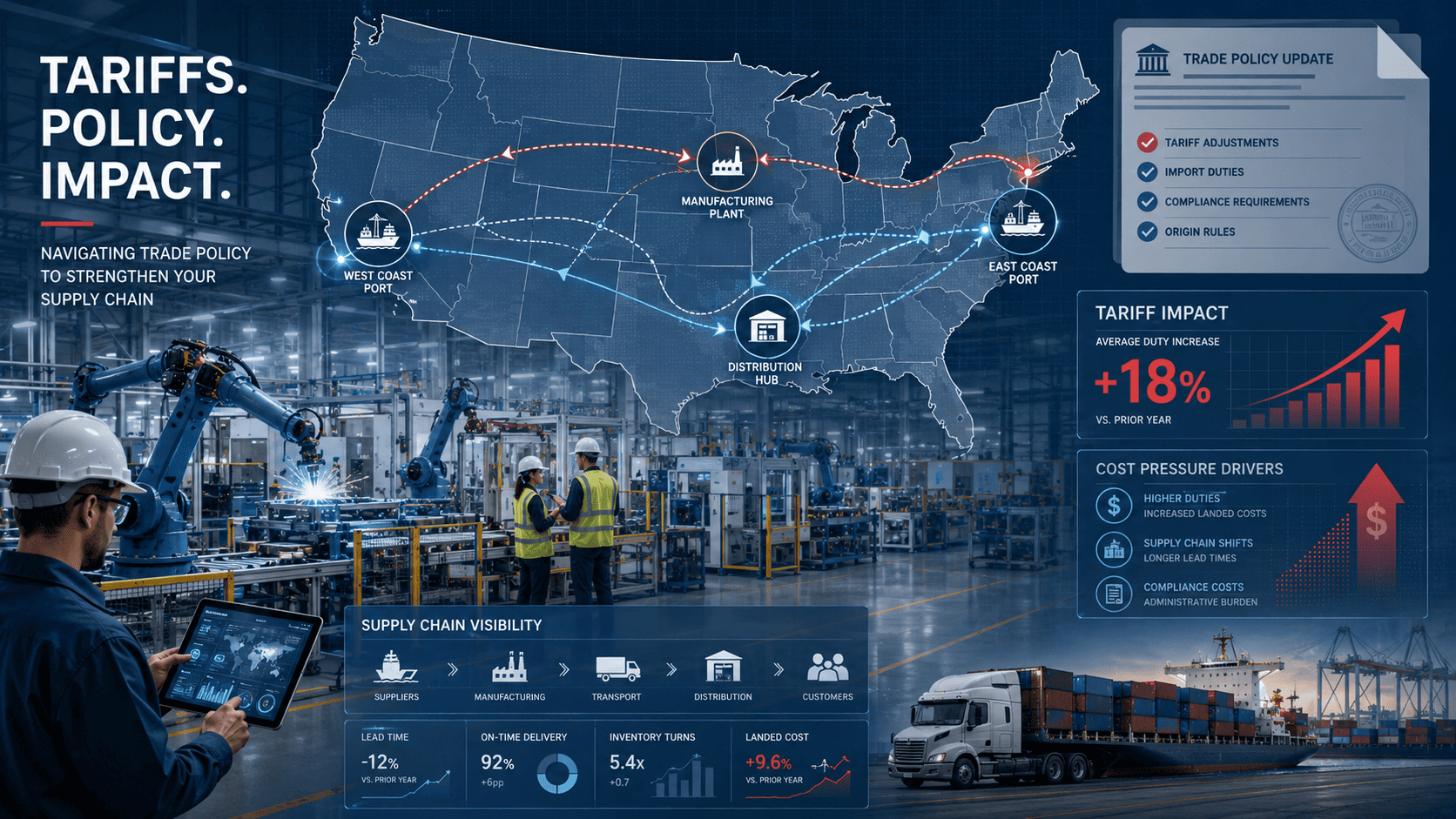
The reshoring conversation has changed. For several years, reshoring was framed as a national objective, a supply-chain correction
June, 2026
Industry
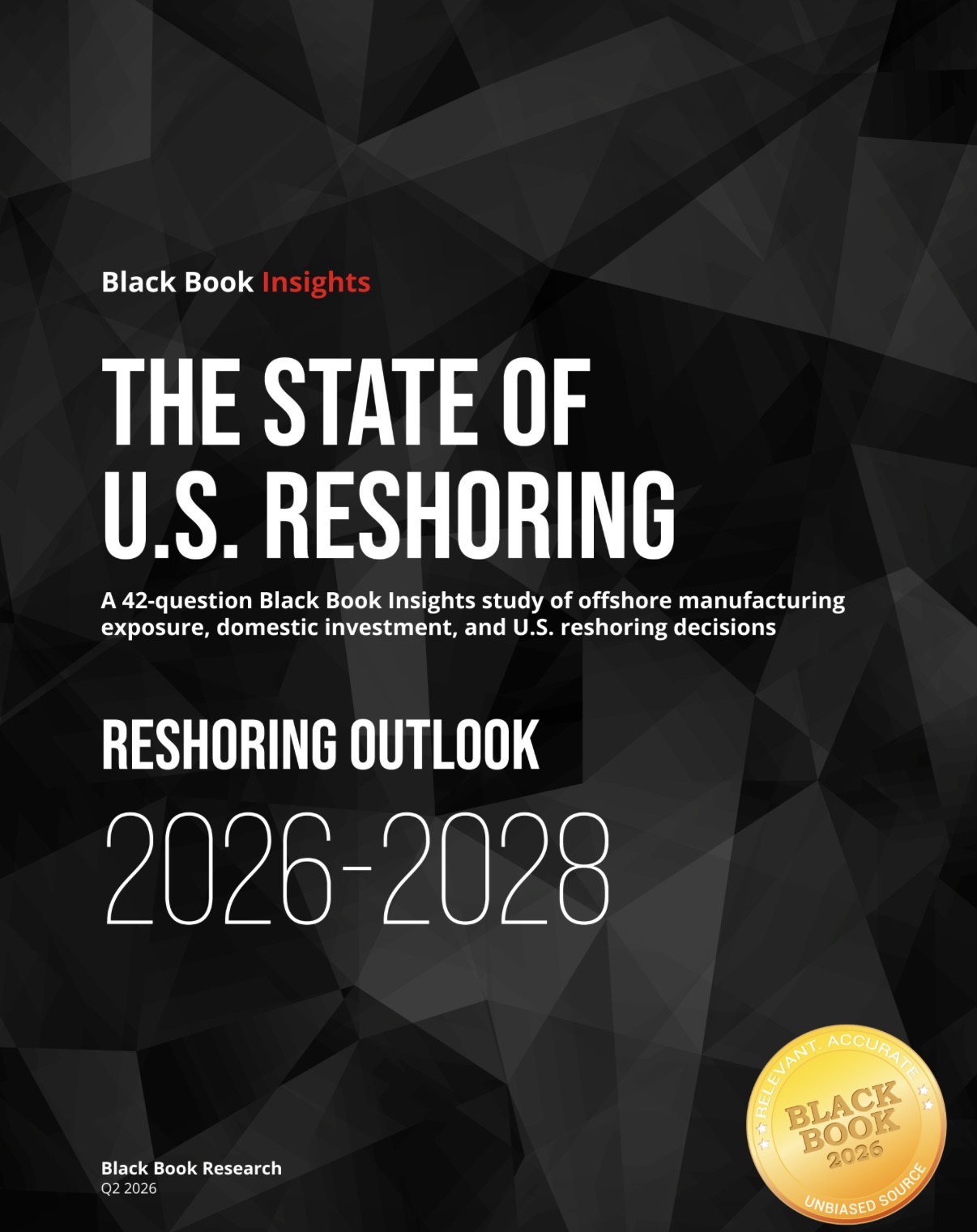
The results show that reshoring is a strategic manufacturing priority, but one that is advancing selectively rather than universally. Companies are pursuing U.S. capacity where resilience, lead-time improvement, policy alignment, and customer access justify the economics.
May, 2026

Industry, Workforce
BPO reshoring isn’t nostalgia—it’s a CX strategy. When service is the product, latency, comprehension, and empathy matter as much as handle time. Onshore teams deliver context-rich conversations that resolve faster and retain more customers. The economics are changing. AI handles the repetitive front-door traffic; human agents focus on complex, emotional, or regulated scenarios. That mix favors higher-skill, onshore agents supported by strong tooling and knowledge bases. Compliance and data residency are growing concerns. Keeping PII and sensitive interactions under U.S. jurisdiction simplifies audits, reduces breach exposure, and aligns with sector-specific regs in healthcare, finance, and government. Language nuance and cultural proximity reduce friction. Misunderstandings drop, escalation paths shorten, and first-contact resolution improves. The cost savings show up in churn reduction and higher NPS, not just in AHT. Talent strategy is modernizing. Remote-first contact centers recruit nationwide, tapping veterans, caregivers, and career switchers. Training leverages simulations and AI-driven coaching that personalize feedback based on actual call data. Quality management is now continuous. Real-time analytics flag sentiment shifts, compliance risks, and knowledge gaps. Coaches intervene the same day, not the next quarter. The feedback loop tightens, outcomes improve. Reshoring BPO also supports product improvement. Support teams become a live sensor network feeding engineering and product with patterns and priorities. Issues get fixed upstream; ticket volume drops downstream. The brand impact is tangible. “U.S.-based support” is a marketing proof point customers recognize—and often pay for through loyalty and premium tiers.
March, 2026

Execution
Successful reshoring stories share patterns more than they share industries. Each began with a candid TCO audit, a tight pilot, and a commitment to standard work before scale. Process discipline, not heroics, carried the day. In electronics, teams often started with a high-mix, moderate-volume line to prove flexibility, then layered automation where variability was lowest. Early wins in changeover time and first-pass yield funded expansion to other SKUs. Medical device players paired quality systems with in-line testing to satisfy regulators and speed approvals. Co-located engineering cut validation loops dramatically, turning compliance into a speed advantage. Consumer brands leaned into “ships from U.S.” as a promise, using shorter lead times to test micro-collections and reduce markdowns. Returns processing and refurbishment programs added margin that offshore networks couldn’t support. Industrial OEMs focused on supplier co-development. By investing in local tier-2 capability—coatings, fasteners, machined components—they stabilized ramps and reduced the long tail of parts-related downtime. BPO and support organizations rebuilt around AI-assisted agents. Automation triaged routine tasks; U.S.-based teams handled complexity, boosting resolution and driving measurable loyalty improvements. In every case, the culture change mattered. Leaders moved daily standups to the line, made OEE and safety visible, and rewarded problem-solving over firefighting. The plants became learning systems. The common denominator wasn’t a perfect plan—it was a tight feedback loop, a willingness to iterate, and the courage to scale after the data said “go.”
March, 2026

Industry, Supply Chain
Electronics has always been a game of time—time to debug, time to qualify, time to ship. Reshoring compresses each of those clocks at once. When design, fabrication, assembly, and test sit within a day’s drive, signal loss between teams disappears and the defect-to-correction loop shrinks from weeks to hours. Printed circuit boards are the nervous system of modern products, and they’re notoriously sensitive to variability. Domestic PCB shops coordinated with U.S. EMS providers enable tighter stack-up control, faster lamination trials, and quicker alternates when materials are constrained. That proximity turns “line down” into “line delayed.” For semiconductors, it’s not just wafer fabs—it’s OSAT, substrate capacity, and advanced packaging. Concentrating those steps stateside reduces transits that add risk and latency to high-value inventory. Packaging closer to final assembly also simplifies traceability and RMA triage. Component sourcing is getting smarter with local buffers. Vendor-managed inventory hubs near EMS facilities let planners pivot during demand spikes without resorting to scavenging or gray-market buys. Quality rises because provenance is visible. DFM/DFA becomes a daily habit. Engineers and operators sit together to shave seconds off placements, optimize fiducials, or adjust solder profiles after a single build. Those micro-optimizations compound across thousands of boards. Compliance is easier when the chain is shorter. UL, FCC, and sector-specific tests integrate into the development cadence rather than gating it. Audit findings become same-week corrective actions instead of quarter-long projects. Security matters in electronics. Keeping firmware builds, encryption keys, and secure elements under one jurisdiction closes attack surfaces created by long, opaque chains. IP risk falls along with cycle time. The net: reshoring rewires electronics for speed, quality, and security. The companies that master local loops will set the cadence for their categories.
March, 2026