
Insights & Analysis
Expert perspectives on reshoring, manufacturing strategy, and supply chain transformation

Technology
Additive isn’t just a new machine; it’s a new math. Complex geometries cost the same as simple ones, tooling is optional, and iteration is cheap. Those properties make U.S.-based production of low-to-mid volumes suddenly make sense. Design freedom reduces part counts. Consolidating assemblies into single prints cuts fasteners, leaks, and quality escapes. Less assembly means fewer stations, less training time, and lower cumulative tolerance stack-ups. Lead times collapse when you print near demand. Spare parts, jigs, and short-run components move from “wait eight weeks” to “ship next week.” Maintenance teams and NPI programs both gain resilience. Materials science has matured. Certified powders, filaments, and resins now cover aerospace, medical, and industrial grades. Post-processing cells—HIP, heat treat, machining—complete the chain inside domestic hubs. Economics improve when you account for risk. Avoided tooling, reduced obsolescence, and lower WIP make additive competitive before you even price the ocean. Add the value of customization, and the equation tilts further. Quality control is data-rich. Layer-by-layer monitoring, in-situ sensors, and serialized build logs create a traceability spine that traditional processes can’t match. Auditors like evidence; additive produces a lot of it. Black Book Insights interviews point to a pattern: additive pays first in spares and fixtures, then graduates to revenue parts. The stepwise path derisks adoption and builds internal champions. Additive doesn’t replace machining and molding—it makes them smarter, faster, and closer.
October, 2025

Technology
Prototyping is where ideas either fly or fail cheaply. Keeping it domestic slashes transit, protects IP, and enables multi-variant testing in parallel. The result is fewer surprises at pilot and a clock that favors the first mover. Machine-time, not calendar-time, becomes the constraint. CNC, soft-tool injection, and quick-turn PCB houses within a one-day radius let teams run overnight experiments and same-week design reviews. Decision velocity spikes. Physical–digital convergence tightens. Scans, CMM data, and instrumented fixtures feed back into CAD/CAE within hours. Simulation assumptions meet shop-floor truth before they ossify into expensive designs. Cross-functional teams co-locate. Reliability engineers, compliance leads, and sourcing sit in the same room with designers and operators. Early “no-go” calls save months; early “yes, if…” calls unlock breakthrough features. Pilot planning starts during prototyping. Fixturing, test coverage, and cell layout are designed alongside the part, reducing the typical valley between prototype and production. Ramps get smoother and cheaper. Vendors become collaborators. Domestic shops share DFM insights without the NDAs and delay that often plague distant partners. Trust builds as iterations shorten and outcomes improve. Black Book Insights clients often report that the best prototypes change the business case as much as the product—revealing simpler BOMs, tighter tolerances where they matter, and cost drivers hiding in plain sight. If speed is a strategy, domestic prototyping is the engine.
October, 2025

Finance
Incentives won’t save a bad plan, but they can supercharge a good one. The key is sequencing: align your capital plan and site choice with credits, grants, and accelerated depreciation so benefits hit when cash outflows peak. Map incentives to the stack: facilities (construction and utilities), equipment (automation, tooling, clean energy), and people (training, apprenticeships). Many programs layer—federal over state over local—if you meet content, wage, and reporting standards. Timing is tactical. Some credits require pre-approval before breaking ground or ordering equipment. Build an approvals Gantt chart alongside your project schedule to avoid missing windows. Documentation is destiny. Meter your spend, track job creation, and tie invoices to the right cost centers. Clean substantiation turns future audits into paperwork, not heartburn. Domestic content bonuses are real levers. If you can re-spec components or materials to meet thresholds, you July unlock step-change benefits without changing your end product. Don’t ignore utility incentives. Demand-response, peak-shaving, and efficiency programs can fund meaningful chunks of metering, VFDs, and storage. They also reduce OPEX from day one. A good advisor pays for themselves. The complexity of statutes, sunsets, and clawbacks is non-trivial. Treat incentives like a workstream with an accountable owner and weekly milestones. The headline: incentives don’t replace TCO—they tilt it. Use them to bring breakeven forward and to de-risk scale-up.
October, 2025

Supply Chain
Not every input can be sourced domestically on day one. The advantage comes from minimizing the distance between the port and the plant, then maximizing control from dock door to dock door. That’s the port-to-plant play. Strategic site selection near inland ports and intermodal yards cuts days out of inbound flows. Containers clear faster, dray is predictable, and transloads feed plants on a steady cadence rather than a feast-or-famine cycle. Cross-docks act as shock absorbers. They break bulk, sequence loads, and align materials to production windows. The result is smaller on-hand buffers and fewer line stops due to mis-sequenced parts. Yard and dock orchestration reduces idle time. Appointment systems, real-time visibility, and geofenced alerts let carriers and plants behave like one organism. Labor plans match actual arrivals, not wishful ETAs. Inside the four walls, flow beats storage. Kitting, milk runs, and point-of-use delivery reduce pick errors and shorten the physical path of work. Space converts from inventory to capacity. Outbound earns the same discipline. Regional DCs or direct-plant fulfillment cut touches and create predictable delivery promises customers can trust. Expedites become rare—and when they happen, they’re affordable. Reverse logistics becomes rational. Repairs, refurb, and returns flow back to centers designed for them, not crammed into receiving docks. Value recapture stops being theoretical. The closer the plant is to the port—and the smarter the path between them—the stronger the reshoring math becomes.
October, 2025

Technology, Workforce
Cobots aren’t headcount replacements; they’re variability absorbers. They smooth peaks, standardize repetitive motions, and hand complex decisions back to people. That blend is perfect for high-mix, lower-volume U.S. plants. Deployment speed is the advantage. With safe speeds, force limits, and quick end-effector swaps, teams can stand up a cobot cell in days. ROI comes from uptime and quality, not just labor minutes. Jobs get better. Operators become cell owners—setting parameters, checking quality, and coordinating material flow. Training focuses on troubleshooting and continuous improvement, which builds pride and paychecks. Quality rises with consistency. Cobots apply the same torque, bead, or placement every cycle. Human oversight catches edge cases; the robot removes noise from the process. Warranty claims decline as variation shrinks. Safety improves. Ergonomic strain drops, forklifts give way to AMRs, and assisted lifts reduce injury risk. A safer plant is easier to staff and retain. Changeovers accelerate. With recipe-driven tasks and modular tooling, teams pivot SKUs quickly. That responsiveness is the core of reshoring’s economic case. Data becomes actionable. Cobots emit cycle data, downtime codes, and exception flags, feeding daily standups with facts, not hunches. Kaizen shifts from “what went wrong yesterday?” to “what will go better today?” The message to talent is clear: the robots aren’t here to take your job; they’re here to take your most tiring 20%—so you can own the rest.
October, 2025

Finance
Start with a clean TCO model. Separate price from cost: labor, energy, scrap, freight, duty, inventory carrying, expedite premiums, warranty, compliance, travel, management overhead, and the option value of speed. The delta lives in the interactions, not a single line item. Treat lead time as a financial variable. Convert days to dollars using demand variability, margin, and obsolescence risk. Shorter cycles reduce safety stock and markdowns, and they increase realized revenue from promotional windows and launches. Model automation as a productivity stack, not a robot line item. Include yield lift, changeover time, maintenance shifts, and training compression. Payback accelerates when you capture both throughput and quality gains. Capex optics improve with incentives. Layer in federal and state credits, training grants, and accelerated depreciation. The right site selection can swing IRR points without changing operations at all. Account for working capital liberation. Repatriating production often frees cash locked in transit and buffer stock. That cash can fund the move itself, effectively self-financing a portion of the reshoring project. Price in risk reduction. Quantify the volatility tax avoided—less freight roulette, fewer port delays, and reduced exposure to policy shocks. Scenario analysis should compare best-, base-, and stress-cases across geographies. Don’t ignore brand and revenue effects. Shorter lead times, “ships from U.S.” messaging, and better fill rates raise conversion and retention. Tie those uplifts to gross profit, not vanity metrics. Finally, build a stage-gate plan with measurable milestones: pilot cell OEE targets, yield thresholds, supplier readiness, and hiring run rates. Finance isn’t just the scorekeeper—it’s the architect of a de-risked ramp.
October, 2025

Sustainability
Energy predictability is production predictability. Stable grids, clear interconnection paths, and transparent tariffs give planners confidence in uptime and cost forecasts—two variables that make or break a business case. Electrification of processes—from heat to motion—makes efficiency visible and controllable. VFDs, high-efficiency motors, and heat pumps convert kilowatt-hours into throughput with less loss, turning energy into a lever, not a liability. Onsite assets add resilience. CHP, battery storage, and rooftop solar shave peaks, ride through disturbances, and lower exposure to price spikes. Even modest systems can stabilize critical lines during grid blips. Power quality matters as much as quantity. Clean sine waves and voltage stability reduce nuisance trips, save equipment life, and keep robots, vision systems, and test stands operating within spec. Reliability is a hidden quality input. Data closes the loop. Submetering by line or area lets teams tie energy use to OEE, scrap, and maintenance. When energy intensity spikes, it often signals a process issue; solving the root cause saves both kilowatts and defects. Utility partnerships accelerate ramps. Early engagement on transformer lead times, protective relays, and redundancy plans prevents “power on last” delays that haunt too many projects. Treat utilities as design partners, not vendors. Sustainability goals meet operations when energy is managed. Transparent usage, lower peaks, and cleaner mixes give credible progress toward carbon targets without sacrificing output. The plant runs better and reports better. Reshoring succeeds where the lights are steady, the power is clean, and the costs are legible. In the U.S., that energy edge is increasingly decisive.
October, 2025
Technology
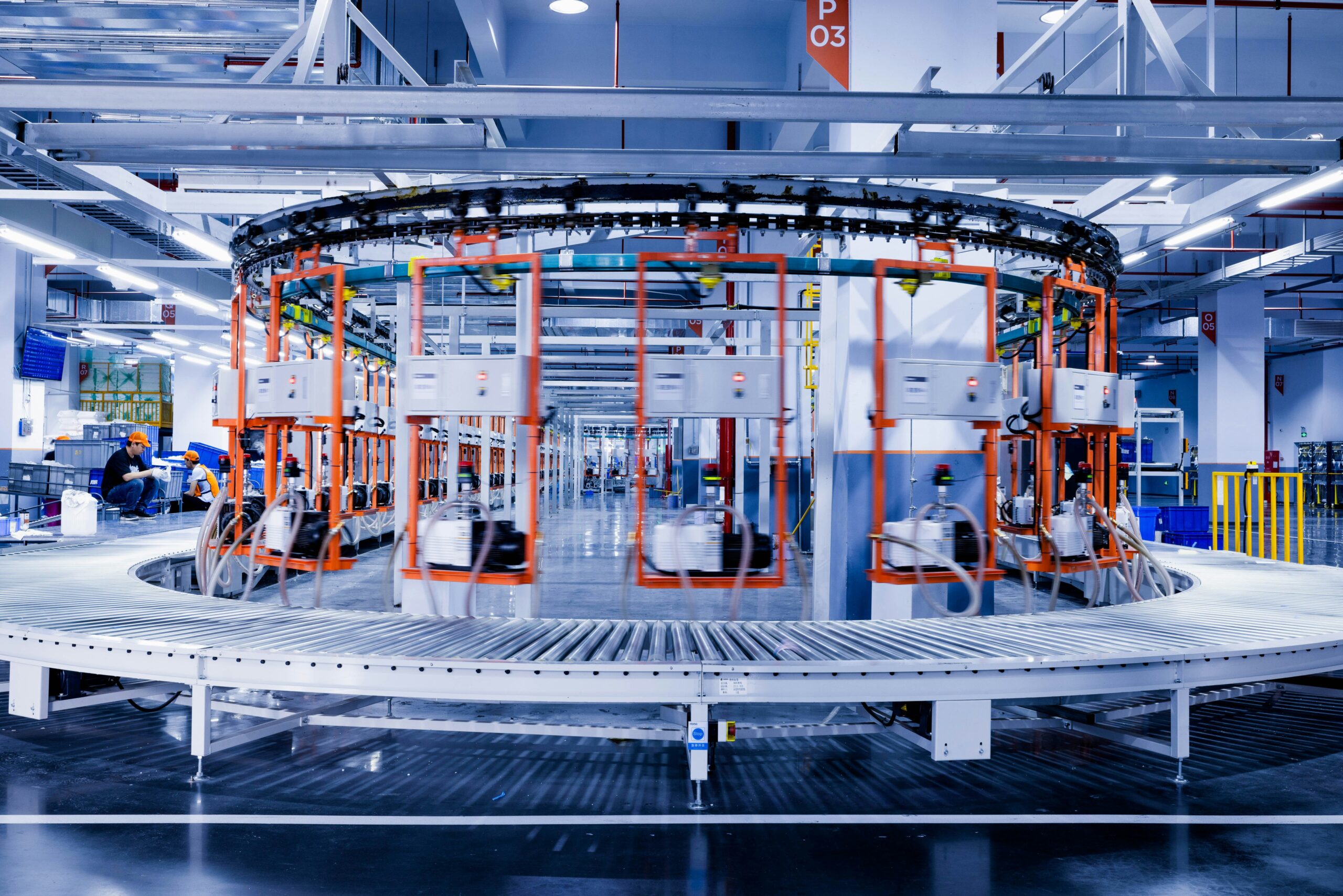
Industry 4.0 is not a gadget list; it’s a management system. Sensors, MES, and analytics matter only if they change decisions. The reshored smart factory wires data to the people who can act within the shift, not after the quarter closes. Connectivity starts at the cell. Machines report cycle times, reasons for stops, and quality checks automatically. Teams hold five-minute reviews at shift start, committing to one improvement they can ship by day’s end. Digital twins move from concept to commissioning. Before a line exists, engineers simulate throughput, ergonomics, and maintenance access, reducing rework and accelerating ramp-to-rate once hardware lands. Traceability becomes native. Lot genealogy, torque signatures, and test results are linked to each unit, enabling instant recall targeting and deep root-cause analysis. Service teams gain superpowers when field issues map back to specific process windows. AI assists, it doesn’t replace. Models flag anomalies, predict failures, and recommend parameter tweaks, but decisions stay with people closest to the work. Augmented intelligence keeps accountability clear and adoption high. Cybersecurity is designed in, not bolted on. Network segmentation, identity controls, and secure update pipelines protect uptime and IP. A secure factory is a reliable factory. Smart factories create smart jobs. Technicians learn to read data, not just dials. The appeal to younger talent is real: modern tools, clear progression, and meaningful work tied to visible outcomes. Local jobs and advanced technology aren’t opposites—they’re complements. The more capable the plant, the more valuable the people who run it.
October, 2025

Workforce
Reshoring is inseparable from talent strategy. The strongest programs start by mapping roles to competencies, not job titles—PLC logic, metrology, GD&T, AOI oversight, MES literacy, root-cause methods, and safety fundamentals. When you define the skills precisely, you can build short, stackable pathways that move people from “observing the line” to “owning a cell.” Community colleges and workforce boards become co-designers of the factory. The best partnerships share curriculum, machines, and instructors. Employers lend fixtures, controllers, and QA gear; schools align syllabi to real production steps so day one on the job feels like day ninety. Apprenticeships are evolving from time-served models to competency-earned models. Candidates progress when they demonstrate capability on actual equipment, not when a calendar page flips. That keeps momentum high and creates visible, motivating milestones. Talent pipelines widen when employers rethink who can excel. Veterans, career switchers, and adjacent tradespeople bring discipline, troubleshooting habits, and safety instincts. With the right bridge modules—electrical fundamentals, pneumatics, SPC—they become high performers fast. Learning continues on the floor. Digital work instructions with inline checks transform training from a classroom event into a daily ritual. Supervisors shift from traffic cops to coaches—reviewing dashboards, flagging skill gaps, and scheduling micro-upskilling in fifteen-minute blocks. Retention is a function of purpose and progression. Publishing a transparent skills ladder—and the pay deltas tied to each rung—turns advancement into a game employees can win. People stay when they can see how their next raise is earned. Soft skills matter in automated plants. Communication during changeovers, clean handoffs across shifts, and disciplined problem statements reduce downtime more than one more sensor ever will. Culture shows up on the OEE chart. The outcome is a virtuous cycle: capability density attracts more investment, more investment funds more training, and a region’s reputation compounds. That’s how reshoring turns into revival.
October, 2025

Strategy
Public policy is now a strategic input, not an afterthought. Federal and state programs are de-risking capital investment, subsidizing workforce training, and accelerating site development timelines. Incentives don’t create strategy—but they make good strategies inevitable. The emerging pattern: targeted credits for strategic sectors (chips, batteries, clean tech), bonus incentives for domestic content, and grants for workforce pipelines. Companies that align their roadmaps with these priorities can tilt the ROI decisively. Permitting reform and infrastructure upgrades reduce time-to-utility—power, water, broadband—shortening the critical path to start-up. Time saved on utilities is time gained on market share. Workforce funding matters as much as capex offset. Apprenticeship grants, upskilling dollars, and community college partnerships turn talent gaps into solvable projects. Plants launch with teams trained on the actual equipment, not generic syllabi. Domestic content requirements create stable demand signals. When procurement favors U.S.-made components, suppliers can justify local capacity with confidence. It’s not protectionism; it’s resilience procurement. Export controls and security standards are rising. Companies with U.S.-based production can comply faster and sell into sensitive markets with fewer constraints. Compliance converts from burden to barrier-to-entry for slower competitors. State competition is fierce—in a good way. Regions are specializing: advanced manufacturing corridors, EV/battery belts, medical device clusters. Choosing a site is now about ecosystem fit, not just incentives on a spreadsheet. The meta-takeaway: policy removes downside risk while market proximity creates upside optionality. Together, they form the strongest reshoring tailwind in decades.
October, 2025

Supply Chain
Lead time is a profit lever. Shorten it, and you free cash, reduce markdowns, and capture demand spikes instead of apologizing for backorders. Reshoring delivers a logistics dividend that compounds across the P&L. Domestic networks shrink the plan–make–move window. Forecasts become less speculative; replenishment cycles speed up. Retailers see higher on-shelf availability; industrials see fewer line-down events. Transportation simplifies. Instead of ocean + port + rail + dray + DC transfers, many flows become plant-to-DC-to-customer in days. Fewer handoffs mean fewer exceptions. Exceptions create cost; eliminating them creates margin. Expedites become surgical, not systemic. A hot truck across two states is a manageable tactic; air-freighting from across the world is a budget crater. Managers regain control of the exception mix. DC design changes when goods arrive predictably. Facilities can run tighter waves, slot smarter, and reduce safety stock. Labor planning stabilizes; overtime drops. Predictability is a workforce benefit, too. Returns and repairs get easier. Reverse logistics inside national borders is quicker and cheaper, enabling refurbishment, parts harvesting, and circular models that were impractical with offshore cycles. Sustainability improves as miles fall and modes shift. Lower freight emissions become measurable and reportable, strengthening ESG narratives with operational reality. Green isn’t just virtue—it’s variance reduction. In sum, the logistics dividend is the quiet engine of reshoring ROI: faster turns, fewer surprises, happier customers.
October, 2025
Technology
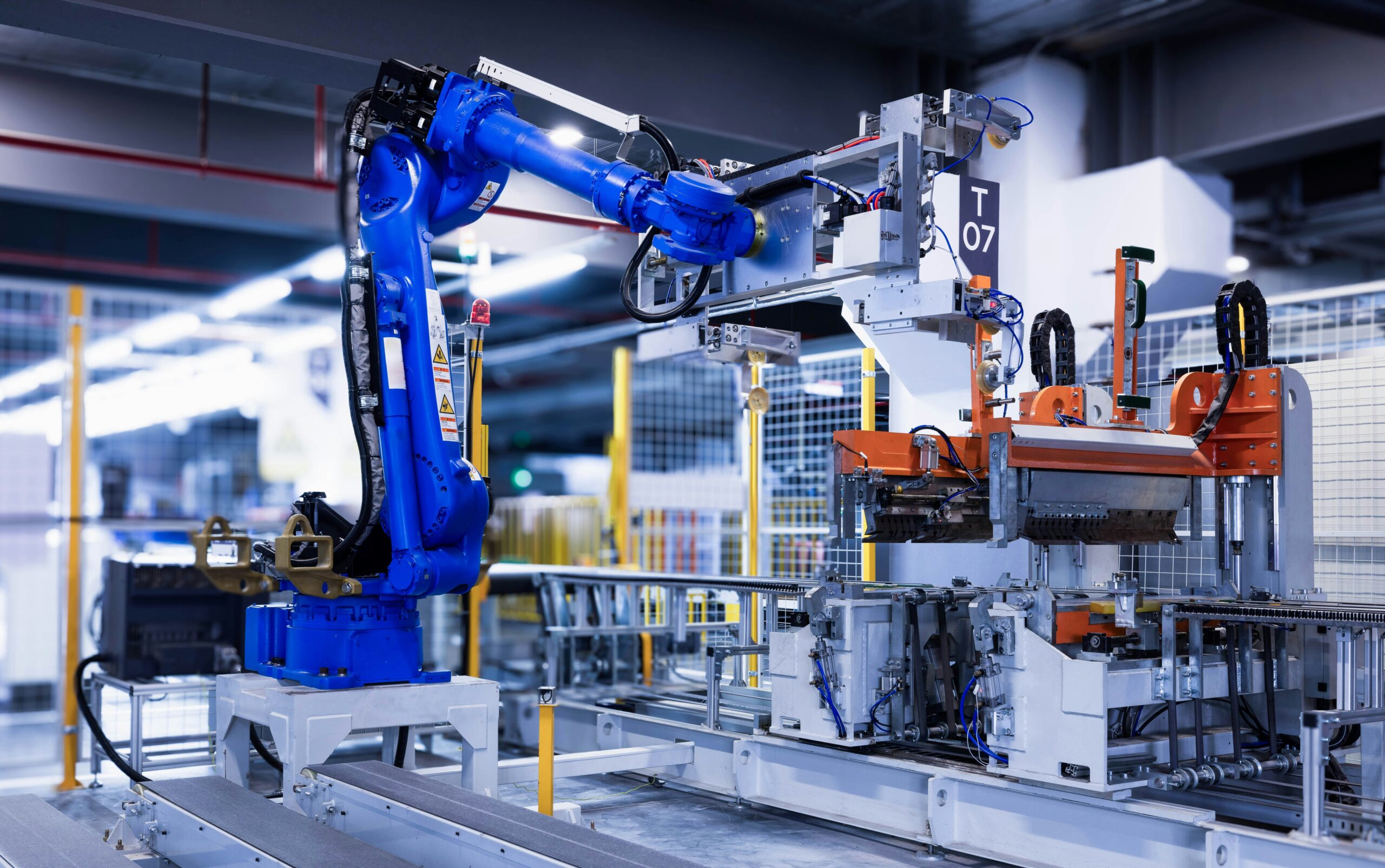
Automation isn’t replacing workers; it’s replacing distance. Cobots, AGVs, and smart fixturing allow U.S. lines to hit world-class throughput with smaller teams—and those teams are higher-skilled, higher-paid, and stickier. Modern cells are modular. A robot, a vision camera, and a torque sensor can be redeployed between SKUs by swapping end-effectors and reloading digital recipes. That flexibility converts product volatility into manageable changeovers. Quality is increasingly in-line and in-code. Automated inspection, SPC dashboards, and machine learning detect drift before defects leave the cell. Instead of sorting bad parts, teams prevent them. Scrap falls, rework shrinks, margins rise. Automation also compresses training curves. Digital work instructions, AR overlays, and one-touch parameter sets let new hires contribute faster. Supervisors shift from “tribal knowledge guardians” to “process coaches.” Data is the fourth utility. MES and IIoT platforms bring OEE, cycle times, and downtime codes into daily standups. When production is software-visible, continuous improvement becomes daily work, not quarterly ritual. The maintenance model flips from reactive to predictive. Condition monitoring and digital twins forecast failures, schedule changeouts during planned downtime, and safeguard uptime. The spare-parts strategy becomes informed, not hopeful. Safety improves with automation done right. Cobots reduce ergonomic strain; AMRs cut forklift risk; e-stops and light curtains are smarter and less intrusive. Safer plants recruit better and retain longer. The economics speak for themselves: higher yield, lower variability, and faster changeovers together beat wage differentials. Automation is the equalizer that makes U.S. unit economics competitive—and often superior—on a total-cost basis.
October, 2025