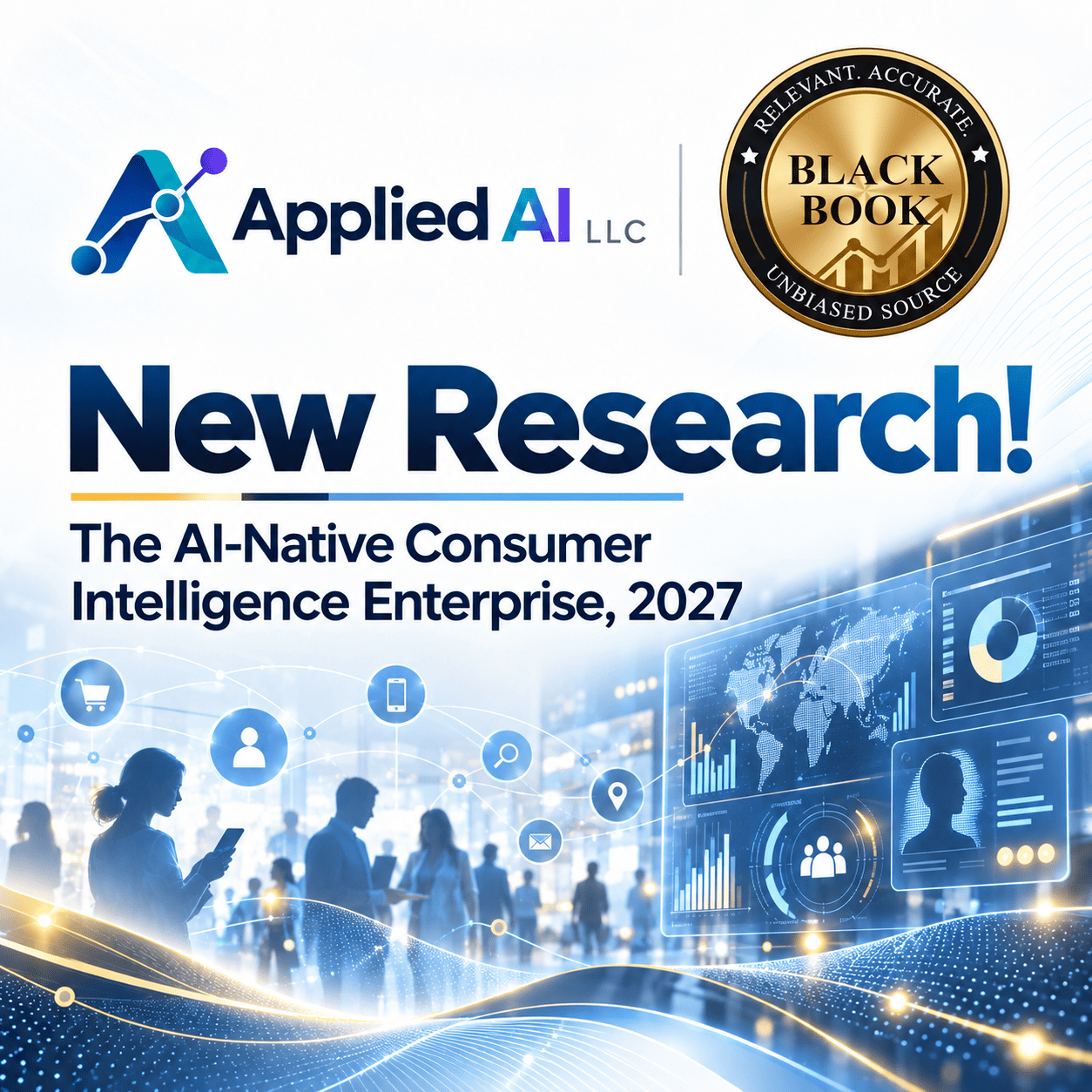
Artificial intelligence is rapidly reshaping how organizations understand consumer behavior and turn data into decisions. The next phase of consumer intelligence goes beyond conversational analytics and AI-generated answers, moving toward systems that can explain behavioral change, predict what happens next, recommend defensible actions, and eventually execute within governed enterprise workflows.
This research explores the transition from traditional descriptive analytics to AI-native consumer intelligence built on verified behavioral data, semantic architecture, predictive modeling, causal inference, and agentic systems. It examines critical challenges including AI reliability, semantic consistency, consumer trust, recommendation attribution, digital twins, enterprise integration, and the growing role of AI in shopping and commerce.
The report argues that competitive advantage will increasingly come not from access to general-purpose AI models, but from proprietary behavioral data, trusted measurement, strong governance, and the ability to connect evidence to action. As AI becomes more deeply embedded in enterprise decision-making, organizations will need to redesign their intelligence infrastructure around reliability, transparency, and governed automation.