The next reshoring bottleneck may not be capital. It may be decision architecture.
From Q2 through Q4 2026, demand for reshoring consulting and advisory firms is likely to rise for a simple reason: companies have moved beyond asking whether supply chains are exposed. They now need to know what to do, in what order, and at what cost.
KPMG’s 2026 tariff survey found that companies are dealing with higher costs, margin pressure, sales declines, investment delays, and a shift from short-term tariff defense to longer-term structural change. Formal planning or active execution of reshoring rose to 26%, up from 10% six months earlier, while 60% of respondents said full reshoring would take one to three years.
That creates a clear advisory market.
In Q2, companies need exposure maps. Which products are exposed to tariffs? Which suppliers are exposed to forced-labor risk? Which SKUs have enough margin to absorb disruption? Which production steps are feasible to move?
In Q3, they need scenario models. This is where reshoring decisions become capital-allocation decisions. Companies need to compare domestic expansion, Mexico-based nearshoring, supplier dual-sourcing, automation, inventory redesign, contract renegotiation, and price pass-through.
In Q4, they need execution plans. Site selection, incentive negotiation, workforce strategy, permitting, utility capacity, supplier localization, and board-ready financial models will matter more than generic reshoring enthusiasm.
The consulting demand is not theoretical. Thomson Reuters’ 2026 trade analysis found that tariff volatility has become the dominant regulatory concern for trade professionals, while supply-chain management became their top priority. Common mitigation strategies include changing sourcing patterns, renegotiating supplier contracts, and nearshoring or moving production to the United States.
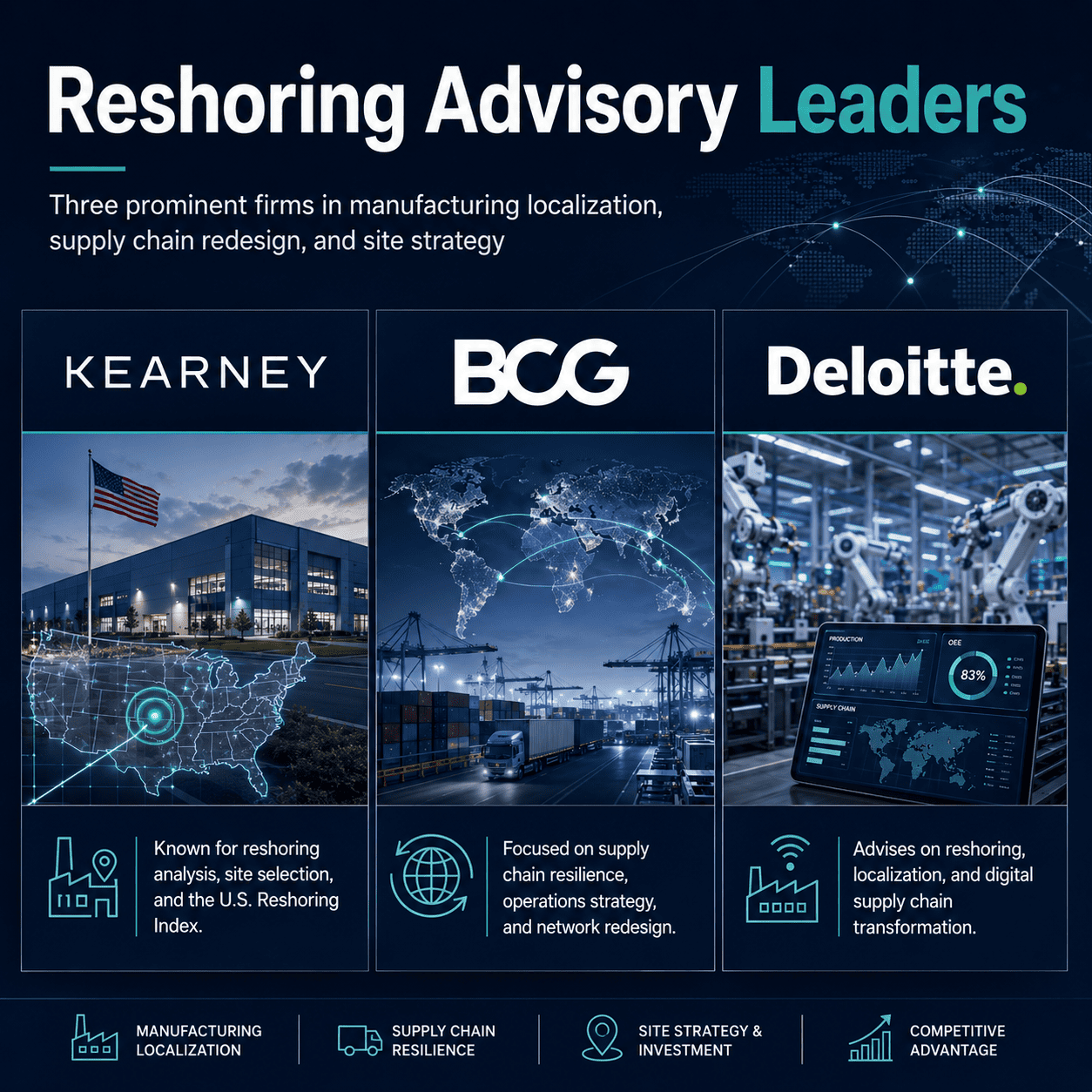
The advisory firms that win this cycle will not simply produce tariff memos. They will integrate trade, tax, supply chain, operations, site selection, automation, incentives, and compliance into one operating roadmap.
The market does not need more reshoring slogans.
It needs execution discipline.