Energy predictability is production predictability. Stable grids, clear interconnection paths, and transparent tariffs give planners confidence in uptime and cost forecasts—two variables that make or break a business case.
Electrification of processes—from heat to motion—makes efficiency visible and controllable. VFDs, high-efficiency motors, and heat pumps convert kilowatt-hours into throughput with less loss, turning energy into a lever, not a liability.
Onsite assets add resilience. CHP, battery storage, and rooftop solar shave peaks, ride through disturbances, and lower exposure to price spikes. Even modest systems can stabilize critical lines during grid blips.
Power quality matters as much as quantity. Clean sine waves and voltage stability reduce nuisance trips, save equipment life, and keep robots, vision systems, and test stands operating within spec. Reliability is a hidden quality input.
Data closes the loop. Submetering by line or area lets teams tie energy use to OEE, scrap, and maintenance. When energy intensity spikes, it often signals a process issue; solving the root cause saves both kilowatts and defects.
Utility partnerships accelerate ramps. Early engagement on transformer lead times, protective relays, and redundancy plans prevents “power on last” delays that haunt too many projects. Treat utilities as design partners, not vendors.
Sustainability goals meet operations when energy is managed. Transparent usage, lower peaks, and cleaner mixes give credible progress toward carbon targets without sacrificing output. The plant runs better and reports better.
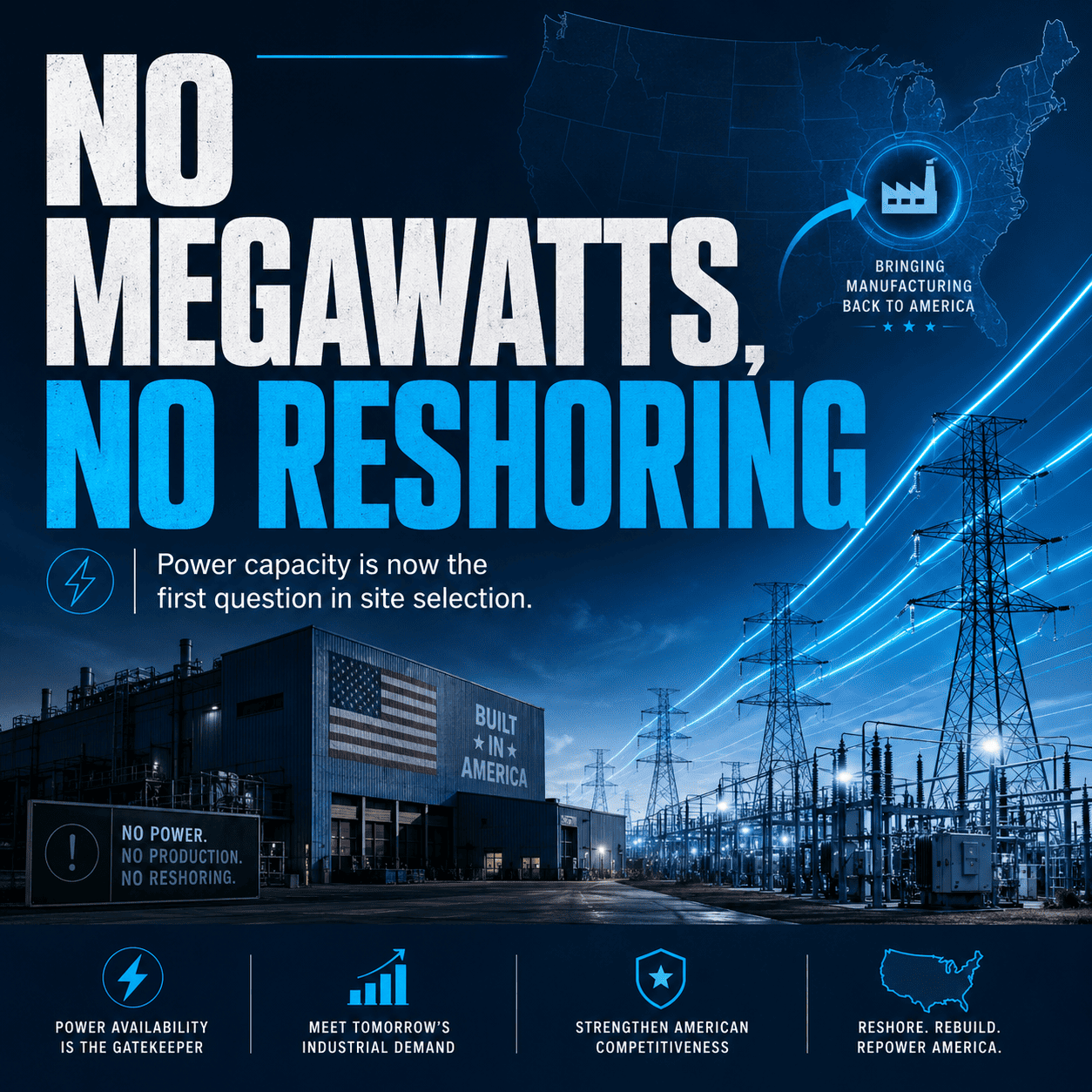
Reshoring succeeds where the lights are steady, the power is clean, and the costs are legible. In the U.S., that energy edge is increasingly decisive.